
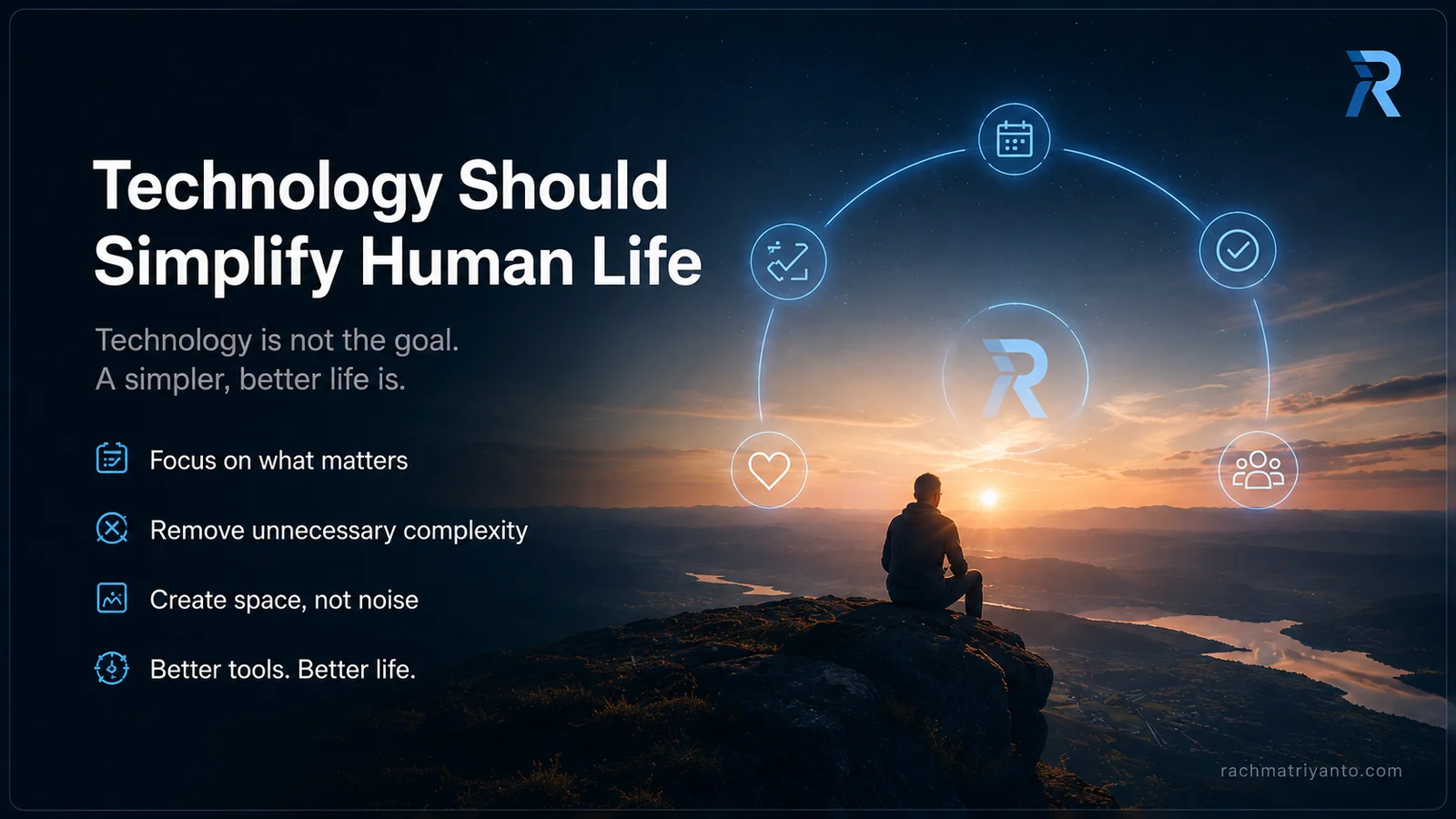
Features are not the same as usefulness
Technology discussions are easily pulled toward capability. What can the system do? How many modules does it have? What can be automated? Which new feature is available?
Those questions matter, but they are not the final test. The more important question is what becomes easier, clearer, safer, or faster for the person doing the work.
Technology should absorb complexity where it can, not simply move complexity from the process into the interface.Working principle
Start with friction
Useful technology often removes a small but repeated burden: searching for information, entering the same data twice, waiting for an approval without visibility, manually reconciling two sources, or remembering a step that the system could prompt.
A small reduction in repeated friction can create more practical value than a sophisticated feature that is rarely used.
Working principle
For every feature, ask: what human burden disappears, what decision becomes clearer, or what risk becomes easier to see?
Good tools improve visibility
A system should help people understand what is happening. What is waiting? Who owns it? What changed? What is at risk? What should happen next?
When technology hides those answers behind too many screens or ambiguous statuses, the tool may digitize the process without improving it.
Automation should protect human judgment
Automation is strongest when it handles repetition, consistency, retrieval, calculation, monitoring, and routing—especially when the rules are stable.
That creates room for people to focus on ambiguity, trade-offs, exceptions, communication, and decisions where context matters.
Closing thought
Technology is valuable when it reduces the distance between a person and a useful outcome.
The best tool is not necessarily the one with the most visible intelligence. It is often the one that quietly removes friction and makes good work easier to perform.